

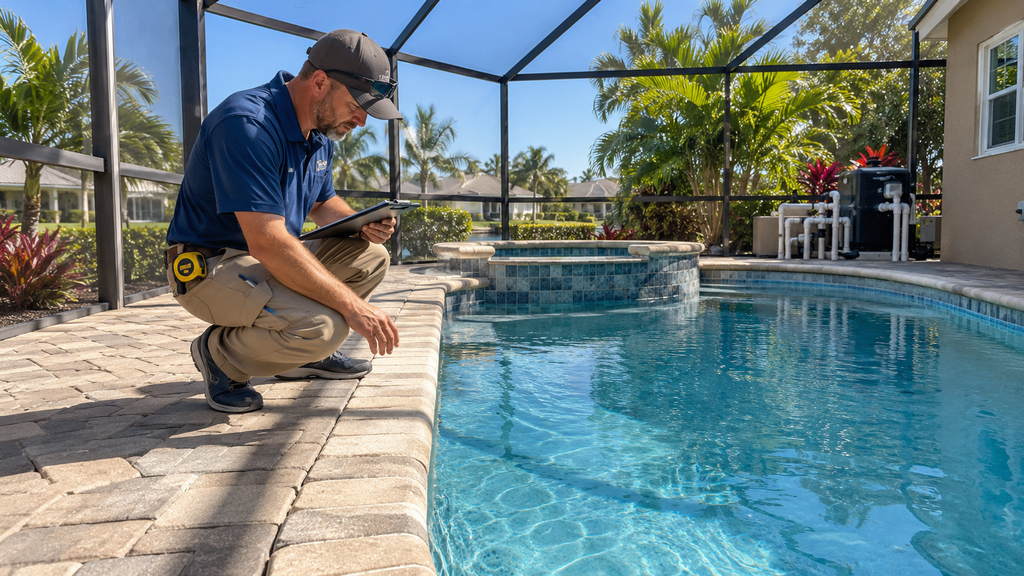
A lot of the calls we get start the same way.
Someone just closed on a house in Lakewood Ranch, Palmer Ranch, Venice, or somewhere else around Sarasota. The pool looked great during the showing. The water was clear. Everything seemed to be running.
Then a few weeks later, the pump starts screaming. The pool won’t hold chlorine. The heater won’t stay on. Or somebody notices a crack or surface problem that wasn’t mentioned before closing.
That doesn’t necessarily mean anyone hid something. More often, the pool simply never got the same level of inspection as the rest of the house.
When you’re buying a home, there are dozens of things competing for your attention. Roofs, air conditioning, plumbing, electrical, insurance, financing—the list gets long fast. The pool can easily become an afterthought.
Before you close on a Sarasota-area home with a pool, here are a few things we’d want you to check.
A Home Inspection Is Not the Same as a Pool Inspection
Most general home inspectors are good at what they do, but a standard home inspection usually isn’t designed to be a full diagnostic inspection of the swimming pool.
Depending on the inspector and the scope of the inspection, they may confirm that the pump operates, look for obvious electrical or safety problems, inspect the visible equipment, and note obvious damage around the pool area.
What they may not do is pressure-test the plumbing, fully evaluate the heater, test the output of a salt chlorine generator, diagnose circulation problems, or closely evaluate the condition of an aging pool surface.
Those are the issues that can turn into real expenses.
A pump replacement or equipment repair is one thing. A failing surface, underground plumbing leak, or structural problem is another.
If an inspection report simply says the pool “appears functional,” don’t assume that means every part of the system has been thoroughly tested.
Seven Things Worth Checking Before You Close
1. Find Out How Old the Pool Equipment Is
Pool equipment in Florida works hard.
Unlike pools in colder parts of the country, Sarasota pools usually operate throughout the year. Pumps, filters, heaters, automation systems, and salt cells accumulate operating hours quickly.
Start by looking for manufacturer labels and installation dates on the equipment. If they’re difficult to read, ask the seller whether they have invoices or maintenance records.
Pay particular attention to:
- Pool pump and motor
- Filter
- Gas heater or heat pump
- Salt chlorine generator
- Automation equipment
- Pool lights
A piece of equipment being older doesn’t automatically make it bad. It simply helps you understand what may need replacement sooner rather than later.
If something is making noise, leaking, losing pressure, or behaving inconsistently, it’s worth having a pool professional look at it before closing. Gettle Pools handles pool repair and maintenance throughout the Sarasota area, including pumps, filters, heaters, lighting, leaks, and other equipment issues.
2. Look at the Pool Surface Up Close
Don’t judge the pool surface from the patio.
Walk down the steps. Look closely at the walls and floor in daylight. If possible, run your hand along the accessible areas of the finish.
Watch for:
- Rough or sandpaper-like areas
- Flaking or peeling
- Discoloration
- Exposed aggregate
- Hollow-sounding areas
- Cracks
- Loose or missing waterline tile
Some cosmetic discoloration is normal on an older pool. Other signs can indicate that the surface is reaching the point where resurfacing or remodeling should be considered.
And don’t let listing photos fool you. Clean water, good lighting, and a photographer shooting around sunset can make a tired pool look fantastic.
Look at it during the day when you can actually see the finish.
If the pool clearly needs more than a cosmetic cleanup, it’s worth getting an estimate for pool remodeling or resurfacing before the inspection period ends.
3. Check for Possible Leaks
Leaks can be surprisingly difficult to spot in Florida.
Between hot weather, wind, splash-out, and normal evaporation, homeowners sometimes assume they’re losing water because of the weather.
Ask the seller a simple question:
How often do you add water to the pool?
Also find out whether the pool has an automatic fill system.
Auto-fill systems are convenient, but they can also mask water loss because the pool quietly replaces the missing water.
If the water level seems questionable, a bucket test can help determine whether the pool is losing more water than normal evaporation would explain. If the results are suspicious, have the plumbing professionally tested.
A leaking underground line is much easier to deal with when you know about it before you own the house.
4. Inspect the Screen Enclosure
Screen enclosures are everywhere around Sarasota, and they’re easy to overlook when everyone is focused on the pool itself.
Take a few minutes to inspect the cage carefully.
Look for:
- Torn or missing screen panels
- Loose fasteners
- Bent framing
- Corrosion
- Damaged doors
- Gates that no longer close properly
- Movement where the enclosure attaches to the deck
Storms, wind, salt air, and Florida’s general enthusiasm for destroying anything left outdoors long enough can all take a toll.
A couple of torn screen panels may be a small repair. Structural damage to the enclosure is a completely different issue.
5. Don’t Ignore Bonding and Electrical Safety
This is one of the least exciting things to look at—and one of the most important.
Metal components around a swimming pool are supposed to be properly bonded so they remain at the same electrical potential. Depending on the pool, that may include handrails, ladders, equipment, light housings, and other conductive components.
The pool equipment and lighting should also have the appropriate electrical protection.
If a light flickers, a breaker trips repeatedly, wiring looks improvised, or you see questionable electrical work around the equipment pad, don’t shrug it off.
Have it checked by someone qualified before anyone starts swimming.
Electrical problems around water are not the place for guesswork.
6. Check the Permit History
Before closing, take a look at the property’s permit history.
Sarasota County provides online permit information, while properties located inside the City of Sarasota may have records through the city’s permitting system.
You’re looking for more than the original pool permit.
Check whether major later improvements were permitted as well, such as:
- Pool additions
- Spas
- Significant deck expansions
- Screen enclosures
- Electrical work
- Gas equipment
- Major remodeling
What you see in the backyard should make sense compared with what’s on record.
Gettle Pools has also covered the subject in more detail in our guide to Sarasota’s pool permit process.
For a home you’re buying, the basic question is simple:
Does what’s sitting in the backyard match the permitted history of the property?
7. Look at the Pool’s Safety Features
Florida requires qualifying new residential pools to have at least one approved safety feature before they can pass final inspection.
Those options can include a compliant pool barrier, an approved safety cover, alarms on doors and windows that provide direct pool access, self-closing and self-latching doors, or a qualifying pool alarm.
When you’re buying an existing home, don’t assume those features are still working simply because they were installed years ago.
Door alarms get disconnected. Gate latches stop catching. Fences get altered. Hardware wears out.
If children or grandchildren will be around the pool, test the safety features yourself and fix anything questionable before the pool starts getting regular use.
One Thing You Shouldn’t Do
Don’t ask the seller to drain the pool just so you can get a better look at the surface.
Florida’s groundwater conditions can make draining an inground pool risky, particularly when groundwater levels are high. Hydrostatic pressure underneath an empty pool can damage the shell or, in extreme cases, cause the pool to lift.
If a pool needs to be drained for inspection, repair, or resurfacing, that should be handled by someone who understands the site conditions and knows how to manage the pressure correctly.
A normal pre-purchase inspection generally shouldn’t require an empty pool anyway.
What Should You Do With Problems You Find?
Finding problems doesn’t automatically mean you should walk away from the house.
Sometimes the inspection simply gives you a better picture of what you’re buying.
An older pump, a worn salt cell, loose tile, damaged screens, or an aging heater all have a cost attached to them. Knowing that cost before closing gives you something concrete to discuss with the seller.
Bigger issues deserve more attention.
If there’s evidence of a plumbing leak, serious surface deterioration, equipment failure, or a questionable crack in the shell, get an actual contractor estimate rather than trying to guess what the repair might cost.
That tells you two things.
First, you have a real number to work with during negotiations.
Second, you’ll know whether you’re dealing with a straightforward repair or looking at a larger pool remodeling project.
The First Month After You Move In
Even when the pool checks out well, it’s smart to establish your own maintenance baseline once the house is yours.
Have the water tested. Check the filter. Confirm that the equipment is running on the schedule you want. Make sure chlorine, pH, alkalinity, stabilizer, and other water chemistry levels are where they should be.
Then figure out who’s going to maintain it.
Florida pools don’t give you much room to ignore them during the summer. Water chemistry can get away from you quickly when temperatures climb and afternoon storms become a regular part of the week.
If you’re going to maintain the pool yourself, learn the routine early.
If you’d rather have someone handle it, Gettle Pools offers weekly pool service for Sarasota-area homeowners.
And if you’re a seasonal resident who plans to head north for part of the year, arrange pool service before you leave—not after the neighbor sends you a picture of a green pool.
Want a Second Set of Eyes?
Gettle Pools has been building, repairing, remodeling, and maintaining swimming pools in the Sarasota area since 1993.
If you’re under contract on a home with a pool and something doesn’t look right, give us a call at 941-366-6267.
Whether it’s noisy equipment, an aging surface, a leak you’re worried about, or a pool that simply hasn’t been properly evaluated, it’s much better to understand what you’re buying before the inspection period runs out.
We’d rather help you catch the problem now than have you discover it after you’ve already moved in.


